False Hero
Play False Hero
False Hero Screenshots























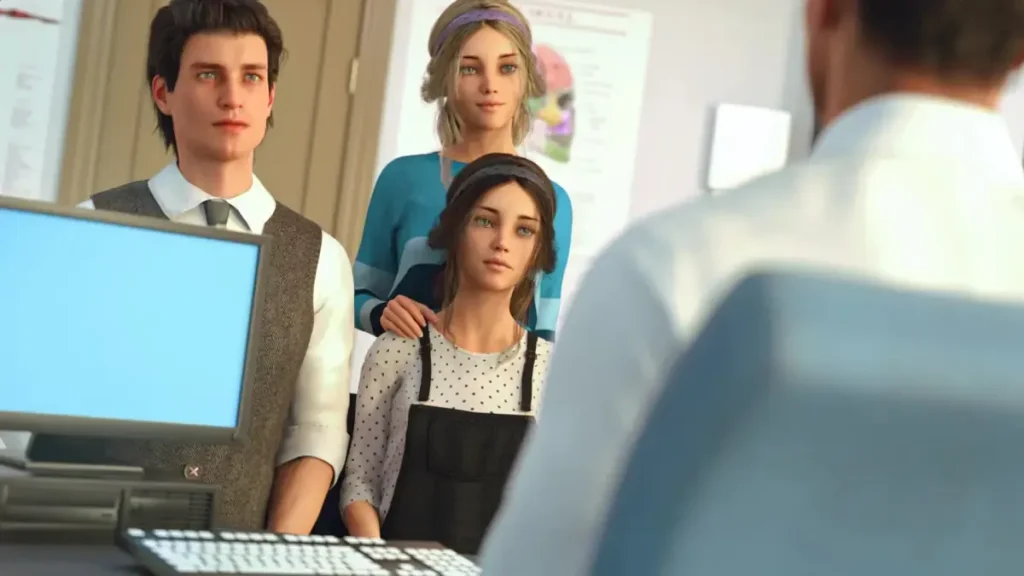
False Hero review
Explore character-driven storytelling and relationship mechanics in this interactive adult experience
False Hero stands out as a choice-based interactive experience built on the Ren’Py engine, offering players the opportunity to navigate complex relationships with multiple characters. Developed by Enyo Eerie, this game emphasizes deeply-developed character arcs and player agency in shaping story outcomes. Whether you’re interested in understanding the core gameplay mechanics, exploring character dynamics, or learning about the game’s development status, this guide covers everything you need to know about False Hero’s unique approach to interactive storytelling and relationship building.
Understanding False Hero’s Core Gameplay and Story Framework
So, you’ve downloaded False Hero and you’re staring at the title screen. Maybe you’ve played a few interactive stories before, clicking through dialogue with one hand while eating pizza with the other. You might be expecting a simple, linear tale with a few flirtatious winks thrown in. Let me stop you right there. 🛑
What you’re about to step into is something profoundly different. This isn’t a game where you mindlessly pick the “nice” option to win hearts. This is a delicate, often frustrating, and deeply rewarding exercise in human connection. You play as Sebastien, an attorney whose life is a carefully constructed facade. Your journey isn’t about saving the world; it’s about navigating the messy, beautiful, and complicated webs of seven distinct women’s lives. Every choice, from the coffee you order to the secret you keep, sends ripples through these relationships. Forget power fantasies—this is a game about vulnerability, consequence, and the stories we tell ourselves and others. It’s a masterclass in player agency in False Hero, where you don’t just watch a story unfold; you live it, flaws and all.
What Makes False Hero Different: Game Mechanics and Design Philosophy
At its heart, False Hero is a Ren’Py interactive novel. If you’re new to the engine, think of it as a beautifully illustrated digital book where your decisions steer the narrative. But calling it a “visual novel” feels almost disrespectful to what the developers, Redamz, have built. The False Hero game mechanics are designed with one core philosophy: authentic consequence.
This isn’t a dating simulator with a points system. You won’t see a “+5 Love” pop up when you compliment someone. Instead, the game operates on a framework of memory, trust, and personality. Each character has her own set of values, traumas, and desires. What earns you the cautious trust of one woman might permanently alienate another. The game remembers everything—your promises, your lies, the topics you avoid, and the small kindnesses you show (or don’t show).
I remember my first playthrough, trying to be a universal “good guy.” I told a small, white lie to Maya to avoid a difficult conversation, thinking it was the polite thing to do. Three in-game weeks later, that lie resurfaced during a pivotal moment with Kaeli, who values brutal honesty above all else. The fallout was catastrophic for that storyline. It was a harsh, brilliant lesson: in False Hero, you are building a single, cohesive reputation.
The choice-based gameplay is the engine of your experience. You will make dozens of decisions per chapter, ranging from mundane daily routines to life-altering moral dilemmas. These choices are rarely simple “Good vs. Evil.” They are shades of grey:
* Do you press your exhausted client, Kaeli, for information to win your case, or give her space and risk your professional standing?
* When the reclusive artist, Elsa, shares a vulnerable piece of her work, do you offer critique (which she claims to want) or unconditional praise (which she might see as pandering)?
* How do you divide your limited time between characters, knowing that neglecting someone can close off their False Hero story arcs entirely?
This system creates an unparalleled sense of player agency in False Hero. You are not selecting from pre-determined story paths A, B, or C. You are writing your own unique version of Sebastien’s life through a cumulative series of micro-decisions. The game, currently in version 0.39.1 Beta as of late 2022, is a living project where this reactive framework is constantly being expanded, making each update a new exploration of cause and effect.
To crystallize the core loop, here are the key gameplay features that define the experience:
- True Choice-Based Mechanics: Every dialogue option and action carries narrative weight, building a unique story trajectory.
- Complex Relationship Progression: Relationships deepen through consistent action, empathy, and navigating conflict, not through simple gift-giving or flattery.
- Character-Specific Storylines: Each of the seven women has a self-contained, novel-length arc that only progresses based on your investment and choices with her.
- Long-Term Decision Consequences: The game has a long memory. Choices made in early chapters can (and will) resurface much later, unlocking or locking story content.
Character Roster and Story Arcs in False Hero
The true soul of False Hero lies in its cast. This is not a collection of tropes with different hair colors. Each character is a fully realized individual with a past, a personality, and a future that is directly shaped by your involvement. Managing these False Hero character relationships is the central challenge and joy of the game. You cannot please everyone, and trying to do so is a surefire path to losing them all.
To help you navigate this complex social landscape, here is an overview of the seven main women who shape Sebastien’s world:
| Character | Role / Connection | Personality Type | Story Focus & Key Challenge |
|---|---|---|---|
| Maya | The Client / Initial Catalyst | Intelligent, Composed, Secretly Vulnerable | Professional boundaries, trust after betrayal, uncovering hidden layers. |
| Kaeli | Fellow Attorney / Colleague | Driven, Cynical, Professionally Ruthless | Ethical clashes, rivalry vs. respect, breaking down emotional walls. |
| Elsa | The Artist | Creative, Reclusive, Emotionally Complex | Inspiring vs. intruding, understanding artistic trauma, gentle persistence. |
| Chloe | The Free Spirit | Energetic, Unpredictable, Seemingly Carefree | Embracing spontaneity, dealing with her chaotic past, commitment fears. |
| Athena | The Academic | Analytical, Reserved, Deeply Logical | Connecting on an intellectual level, patience, deciphering subtle emotional cues. |
| Jade | The Enigma | Mysterious, Guarded, Operates in Shadows | Unraveling secrets, proving loyalty, navigating a potentially dangerous world. |
| Naomi | The Old Friend | Familiar, Comforting, With Unresolved History | Reconciling past and present, nostalgia vs. new beginnings, foundational trust. |
This structure allows for incredible depth in False Hero character development. Chloe’s route, for example, isn’t just about fun dates. It’s about whether Sebastien can provide a stable anchor for someone who flees from stability, and if he can handle the storm that comes with her sunshine. Similarly, earning Athena’s affection isn’t about grand romantic gestures; it’s about engaging with her mind, respecting her space, and understanding that her love language is intellectual connection.
The False Hero story arcs are progressed deliberately. You must seek out characters at specific locations and times—Elsa might only be available at her studio in the evening, while you can only meet Kaeli at the law firm during the day. This mimics real life, where relationships require intentional time and effort. You can’t max out every relationship in one playthrough; the game forces you to choose who to prioritize, making each completed arc feel like a personal achievement.
The game’s fictional setting provides a perfect sandbox for these stories, free from real-world constraints but grounded in relatable emotions. Regarding intimate content, False Hero integrates such moments as narrative culminations, not the goal itself. They are presented as extensions of emotional closeness and trust, available only after significant relationship building, and always within the context of the characters’ evolving connection.
How Player Choices Shape Your False Hero Experience
This is where the magic happens. In False Hero, you are the author, director, and lead actor. The choice-based gameplay is your toolset. Let’s talk about how this player agency in False Hero manifests in tangible, sometimes heartbreaking, ways.
Your decisions primarily shape two things: False Hero character relationships and the narrative’s direction. A character’s route can branch into paths of deep trust, passionate romance, steadfast friendship, or bitter alienation. For instance, with Maya, you can build a relationship founded on transparent honesty, which is difficult but leads to a profound bond. Alternatively, you can maintain a more manipulative, attorney-client dynamic, which opens different, often colder, narrative possibilities. These aren’t “good” or “bad” endings in a traditional sense; they are emotionally coherent conclusions to the story you’ve told together.
The consequences are rarely immediate. The game excels at delayed payoff. A supportive comment you made to Elsa about her art in Chapter 2 might be the reason she finally lets you into her private exhibition in Chapter 8. Conversely, brushing off Chloe’s seemingly trivial request for help might mean she never calls you when she’s truly in trouble later on. This design makes every interaction feel meaningful.
My most memorable “Aha!” moment was on a replay focusing on Kaeli. Early on, I chose to side with her in a contentious office debate, against my own initial judgment. It felt like a minor professional alliance. Chapters later, when my Sebastien was in a ethical bind, she was the one who provided crucial, off-the-record advice. The game had remembered that forged alliance and paid it off in a way that felt organic and earned. That’s the power of its narrative design.
This level of False Hero character development is dependent on you. A character will only reveal her fears, dreams, and past if you make the choices that create a safe space for her to do so. You are not unlocking backstory dumps; you are slowly being granted privilege as trust grows. The Ren’Py interactive novel framework is perfect for this, allowing for subtle changes in character expression, music, and scene composition based on your standing with them.
Ultimately, the False Hero game mechanics serve a singular purpose: to make you feel the weight of human connection. You will second-guess your choices. You will reload saves to see how a different word could change everything. You will grow attached. And when you finally reach the end of a character’s arc in this ongoing beta (remember, 0.39.1 is a snapshot in a longer journey), you won’t feel like you “won” a game. You’ll feel like you’ve lived a chapter of a life, with all its beautiful, imperfect consequences. That is the unique, compelling promise of False Hero.
False Hero presents a distinctive take on interactive storytelling by prioritizing character depth and player choice over formulaic narratives. The game’s foundation in Ren’Py technology enables complex relationship systems where your decisions genuinely impact character development and story progression. With seven uniquely designed characters, each offering distinct personality traits and narrative paths, the game rewards players who invest time in understanding individual character preferences and motivations. The ongoing development cycle demonstrates the creator’s commitment to refining gameplay mechanics and expanding content. Whether you’re drawn to relationship-building simulations, choice-driven narratives, or character-focused storytelling, False Hero offers a framework where your decisions shape the experience. As the game continues evolving beyond its current beta status, players can expect further refinements to mechanics and expanded storyline content that deepens the interactive experience.