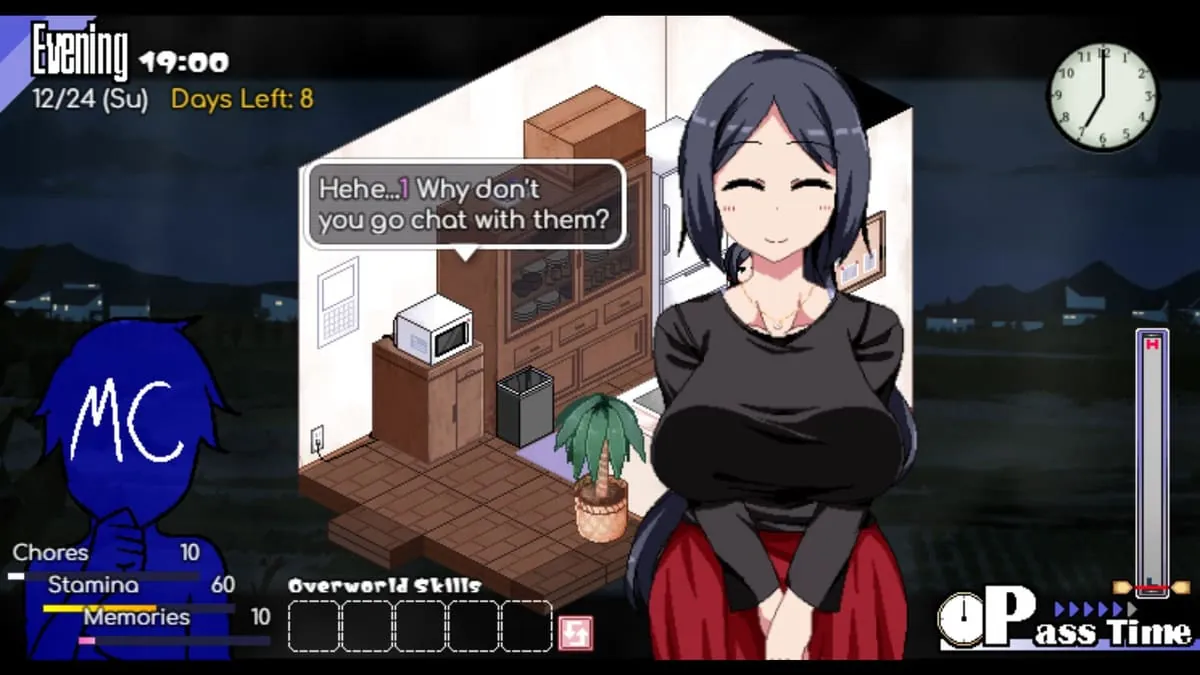
Meeting
Play Meeting
Meeting Screenshots






Meeting review
A player-focused guide to mechanics, routes, and player experiences
This article is a comprehensive player’s guide to Meeting, the adult-oriented visual novel game that blends narrative choices with character-driven routes. In the first paragraph you’ll find the main keywords Meeting, Meeting game, and Meeting porn game to ensure clarity for readers seeking detailed information about this title. I’ll walk you through how the game plays, what to expect from its routes and scenes, and share practical tips from my own playthroughs to help you get the endings you want while avoiding common pitfalls.
Gameplay and Mechanics of Meeting
So, you’ve downloaded Meeting and you’re ready to dive in. Welcome! 👋 This isn’t your typical visual novel where you just click through text. Meeting’s whole magic—and its occasional frustration—lies in its intricate, player-driven design. Every choice, from a seemingly throwaway line of dialogue to a major decision, ripples out to shape your entire experience. This chapter is your deep dive into the Meeting game mechanics, the labyrinth of Meeting routes, and the strategies you need to craft your perfect story. Think of this as your co-pilot’s guide on how to play Meeting.
Core loop and interface: How choices shape scenes
When you first boot up Meeting, the interface feels clean and inviting. You’ve got your text box, character sprites that are wonderfully expressive, and a simple menu for settings and saving. But don’t let the simplicity fool you. The real engine of the game is hidden in plain sight: the choice prompts. 🎮
The core loop of Meeting is deceptively straightforward: Read → Choose → Experience → Replay. You read through beautifully written scenes, you’re presented with choices (sometimes obvious, sometimes painfully subtle), and you live with the consequences. The “replay” part is where the game truly shines. Meeting is built with the assumption you’ll revisit chapters. It’s not about finding a “right” path, but about uncovering all the possible paths. The game tracks everything in the background using a system of hidden flags and relationship values. There’s no on-screen stat sheet shouting “ALEX +5” at you—the feedback is purely narrative. Did a character smile softly at your comment, or did they glance away? That’s your meter.
Let me give you a personal anecdote. Early in my first playthrough, I encountered a scene where the main group is planning a weekend trip. Alex, the more reserved character, suggested a quiet hike. Jamie, the energetic one, was pushing for a chaotic city adventure. I, trying to be the peacemaker, chose a line that was essentially, “Let’s just all decide together!” Seems harmless, right? 🥲 Wrong. That choice wasn’t about the trip; it was a hidden check for assertiveness. By not siding with either character’s clear vision, I inadvertently set a flag that made my character seem indecisive. Much later, in a crucial scene, Alex hesitated to confide in me, referencing that “you always try to please everyone” vibe. My early, well-intentioned choice had quietly closed a door I didn’t even know was there. This is the essence of Meeting game mechanics—they are subtle, integrated, and brilliantly consequential.
The save system is your best friend. You have multiple save slots, and you should use them liberally. The game also features a handy chapter select once you complete an episode, which is essential for Meeting replay tips. In the settings, I highly recommend tweaking the text speed to your liking and enabling the dialogue history log. This log is a lifesaver when you’re replaying a scene and can’t remember exactly which charming (or disastrous) line you picked last time.
Routes, stats and unlockables: Progression explained
Understanding Meeting routes is key to mastering the game. Unlike some games with a clear “route selection” menu, Meeting’s routes are organic, converging and diverging based on a cocktail of your choices. Progression is gated behind two main pillars: affinity with individual characters and the triggering of specific story flags.
Think of affinity as an invisible meter for each main character. It’s influenced by:
* Major Choices: Clearly siding with one character over another.
* Consistency: Supporting the same character’s worldview or goals across multiple scenes.
* Key Moments: Unique dialogue options that only appear if you’ve made certain prior choices.
The story flags are binary switches—on or off. Did you ask about a character’s family photo? Flag ON. Did you skip exploring the garden in Chapter 2? Flag OFF. These flags don’t just change a line of dialogue; they can unlock entirely new scenes, alter character appearances, and determine which ending variant you receive.
Here’s a short case study from my own Meeting progression journey. I was replaying Episode 4 to try and reach a special scene with Sam. I’d read it involved a late-night kitchen conversation. My first few tries, I kept getting the standard version. I was making all the “right” choices with Sam during the main story, so why wasn’t it triggering? 🤔 Finally, I dug into a community forum (more on those later) and learned I needed a flag from Episode 1: I had to have chosen to help Sam clean up after the initial party, a task that seemed totally unrelated. Once I replayed from that point with that single change, the beautiful, intimate kitchen scene unlocked. This is how Meeting game mechanics weave a complex web—your early-game behavior directly enables or blocks late-game content.
So, what do you get for all this meticulous playing and replaying? Meeting rewards you richly:
* Alternate Scenes: Completely different versions of key events, often providing deep character backstory.
* CG Gallery Unlocks: Beautiful still images that are only viewable in the gallery after you’ve seen them in-game.
* Ending Variations: The game features multiple core endings, but within each, there are subtle variations based on your final relationship states and key flags. Getting the “True” ending for a character often requires a near-perfect alignment of choices and flags.
* Bonus Epilogues: Some of the most satisfying content is locked behind seeing multiple main endings, encouraging you to explore every major Meeting route.
Tips for first playthrough: What I learned
Alright, let’s get practical. If you’re starting your first journey, here’s my hard-earned, actionable advice on how to play Meeting without pulling your hair out.
Golden Rule: There is no “wrong” first playthrough. Play blind, follow your heart, and embrace your unique story. The messier, the better! The replay value comes from fixing (or leaning into) those “mistakes.”
Save Strategy is Everything: Do not rely on a single save file. Do not rely on just quick-save. Here is a foolproof Meeting save strategy:
| Save Slot Type | Recommended Use | Why It’s Essential |
|---|---|---|
| Quick Save | Right before any choice. | For instant experimentation. Try all dialogue options in a conversation. |
| Chapter Start | At the beginning of each new chapter. | A clean rollback point if you realize you’ve been on the “wrong” path for a while. |
| Route Branch | When you feel the story diverge (e.g., choosing who to spend the day with). | This is your major decision backup. Allows you to explore other routes without restarting the whole game. |
| Final Choice | Before the final sequence of the game. | Ending variations often hinge on the last 2-3 choices. This lets you see them all. |
Document Your Journey: Keep a simple notepad file (physical or digital) open. Jot down big choices and their immediate effects. Something like “Ch2: Helped Sam clean → he thanked me quietly.” This log will be invaluable when you’re planning future replays and becomes your personal Meeting choices guide.
Common Early-Game Pitfalls:
* Trying to Make Everyone Happy: As my anecdote showed, Meeting often interprets this as being non-committal. It’s okay to have favorites! 🚩
* Rushing Through Text: The clues for future flags are often in casual descriptions or seemingly minor dialogue. Savor the writing.
* Ignoring “Insignificant” NPCs: Sometimes, a conversation with a secondary character can set a flag that a main character references later.
Pacing and Community: Don’t burn yourself out trying to 100% the game in one sitting. Treat each route as its own novel. Enjoy the ride. If you get stuck, the fan community for Meeting is incredibly passionate. A quick search for “Meeting scene unlock guide” or “Meeting flag help” will lead you to detailed, spoiler-tagged forums where players dissect the Meeting game mechanics. If the game has mod support, these communities are also where you’ll find recommendations for trusted patches that might fix bugs or add quality-of-life features. Always ensure you’re downloading from reputable sources, often linked directly from the game’s official page or major fan hubs.
Finally, use the in-game tools! Turn on the auto-read feature for scenes you’ve already seen during replays. Adjust the skip function to “skip only read text” to speed up your Meeting progression on subsequent runs. The game wants you to explore, and it gives you the tools to do it efficiently.
Mastering the Meeting game mechanics isn’t about cracking a code; it’s about learning to listen to the game’s subtle rhythms. Your first playthrough is your authentic story. Every replay after that is a chance to peel back another layer, unlock a hidden smile, or mend a fractured friendship. With a solid Meeting save strategy and these Meeting replay tips, you’re ready to not just play, but to truly unravel everything this deep, reactive narrative has to offer. Happy exploring! 🌟
Meeting is a branching, choice-driven title that rewards careful saves, curiosity, and a willingness to replay for alternate routes. Across gameplay, character routes, audiovisual presentation, community resources and practical walkthrough tips, this guide covered the essentials you need to explore the game fully. Use the save strategies and route tips here as a starting point, test choices deliberately, and engage with community resources if you want translations or optional content. If you enjoyed this guide, try one of the route checklists on your next playthrough and share your experiences with other players.